Travel guide
Northern lights guide
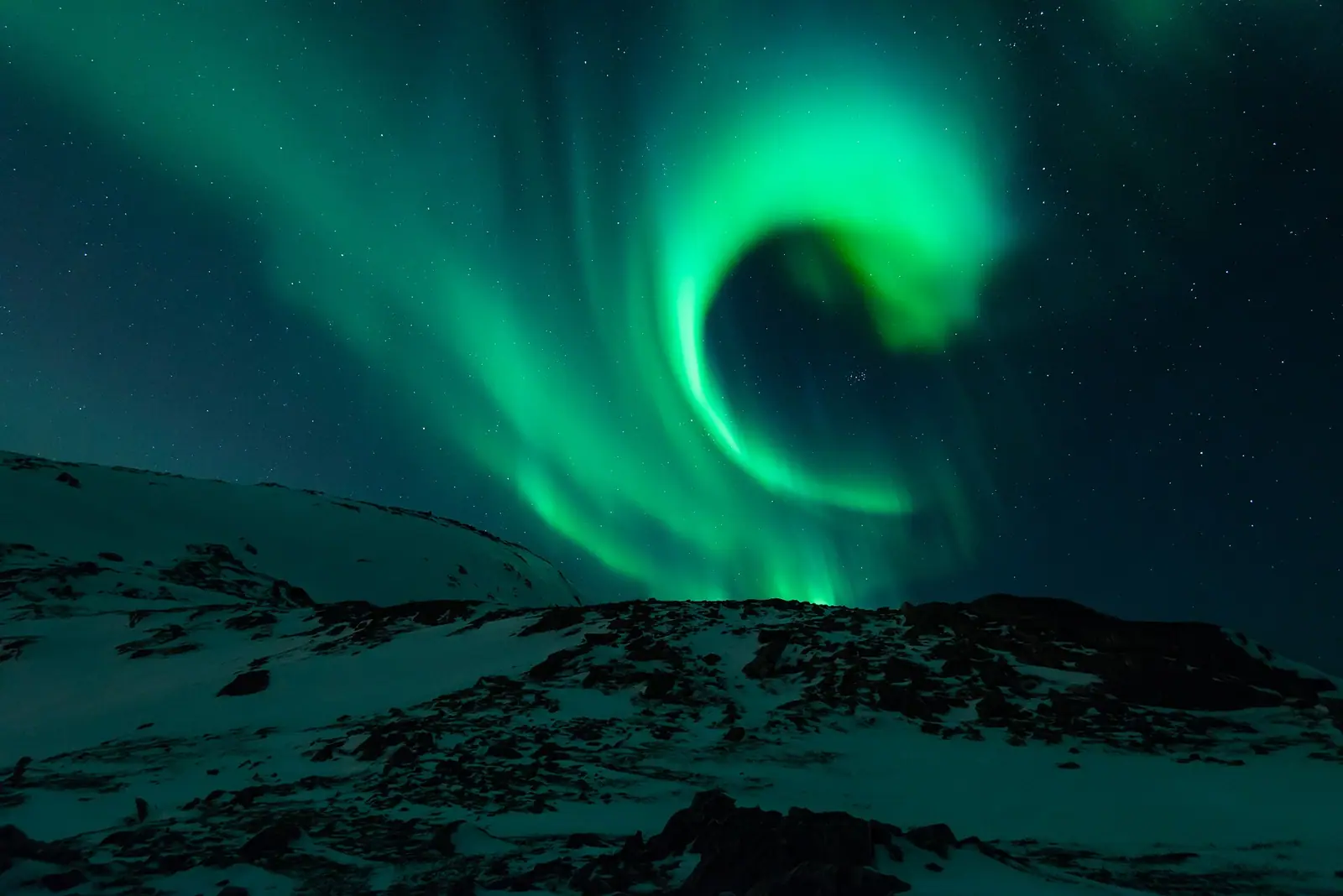
The aurora is caused by charged particles from the sun hitting the upper atmosphere. Northern Norway lies under the auroral oval, so on a clear, dark night there is a good chance to see it even with modest activity.
The aurora is caused by charged particles from the sun hitting the upper atmosphere. Northern Norway lies under the auroral oval, so on a clear, dark night there is a good chance to see it even with modest activity.
When
From about late September to early April; dark enough from roughly 18:00 to 02:00. Most activity is often around 22:00–01:00, but it can appear any time it is dark.
Clear sky is key
Cloud cover matters more than the KP index. Coastal places such as Tromsø and Lofoten often have cloud while inland valleys and Finnmark are clear – this is why guides 'chase'.
Moon
A full moon lights the landscape for photos but makes faint aurora harder to see. New moon gives the darkest skies.
Where
Tromsø, Lyngen, Senja, Alta, the Finnmarksvidda plateau, Lofoten, Vesterålen, Kirkenes and Svalbard all lie in the aurora zone.
Photography
Use a tripod, manual focus at infinity, wide aperture, ISO 1600–3200 and 2–10 second exposures. Bring spare batteries; cold drains them fast.
Midnight sun months
From about late April to mid-August it is too light to see the aurora in Northern Norway.
Get a quote
Tell us your dates – we'll plan the rest.
Send a short request with dates, group size and what you'd like to do. We reply by email with a proposal and a quote.